Through most of 2024, "AI in marketing" meant a chatbot tacked onto a product page, or a generative tool that wrote five variants of a headline. Useful, but not transformative. 2025 is different. We are watching a real shift from AI-as-assistant to AI-as-operator — systems that take a goal, make decisions, and execute across your stack without a human in the loop for each step.
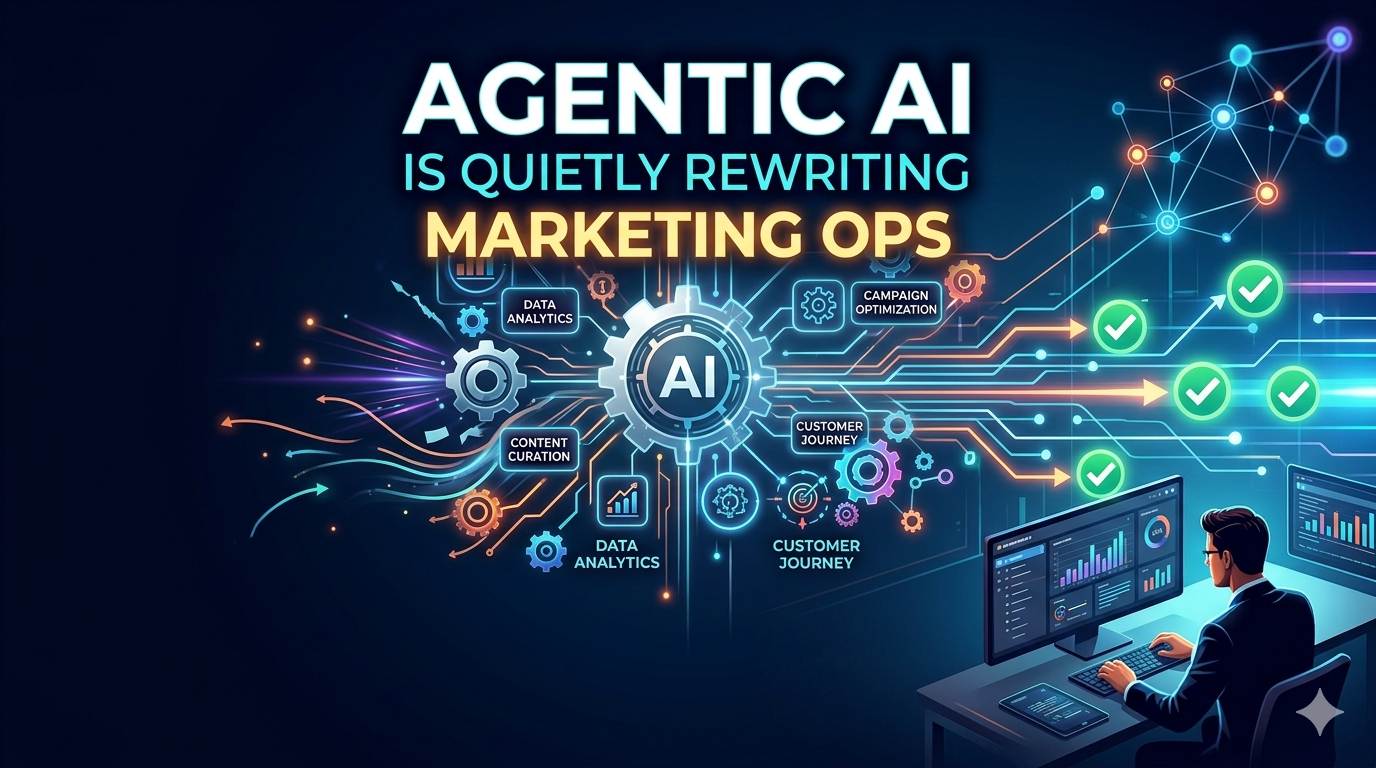
What "agentic" actually means
The distinction matters. A generative model produces an output in response to a prompt. An agent has a goal, access to tools, and the ability to sequence its own work. You do not ask it to "write a subject line" — you ask it to "get open rates above 40% on the winback campaign" and it writes, tests, measures, and iterates.
What makes this feasible now is not a smarter model — it is three boring infrastructure pieces that finally lined up: reliable tool use (function calling), persistent memory, and evaluation loops. Put together, an agent can read your campaign history, decide what to test next, launch it via your ESP API, watch the numbers, and adjust. At some point, you stop reviewing every send and start reviewing the agent's weekly plan.
Where it is already working
We have watched three use cases move from novelty to production in the last six months:
- Creative iteration on paid. An agent pulls last week's performance from Meta Ads Manager, drafts new creative variants, schedules them, and kills underperformers. Humans review the weekly strategy doc, not each ad.
- Lifecycle email. Instead of a static drip sequence, an agent decides what each user gets based on behaviour. The "campaign" becomes a policy rather than a schedule.
- SEO content operations. Topic research, outline, draft, internal linking, publish. A human editor still shapes voice and judges quality — but moves from author to editor.
What it does not fix
Agents inherit whatever strategy they are given. They will confidently execute a bad plan. If your positioning is muddled, your agent will produce muddled copy at scale. The automation makes strategy more valuable, not less — because the cost of a wrong strategy compounds faster.
The other thing agents do not fix: your data. An agent that cannot see why a campaign underperformed will keep making the same bet. Investing in clean event tracking and a single source of truth for customer data matters more than ever.
What to do about it
Pick one workflow that is repetitive, measurable, and has a clear success signal. Start there. Build trust by letting the agent run in shadow mode first — it proposes, you approve — then gradually raise the autonomy threshold as you see its judgment prove out. Within six months the ratio of human-touched work to agent-touched work in your marketing org will flip, and the teams that figured out how to manage agents rather than tasks will have a structural advantage.
Agentic marketing is not coming. It is here, running quietly in a handful of teams, and the gap between them and everyone else is widening monthly.